

Tuning your foils for better control
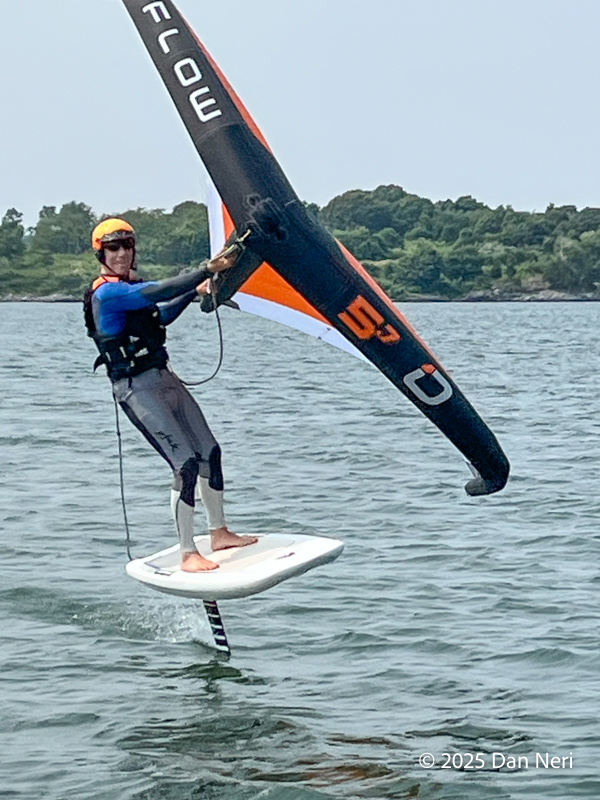
After the last post on sanding a Donaldson Trailing Edge, I thought it only fitting to show how I take our foil tuning one more level.
Do you have to go through all of this sanding and work to have fun with your foil gear, not at all. But for me who is always experimenting, testing, and learning, it is fun, and I feel the difference, as do foilers in our group.
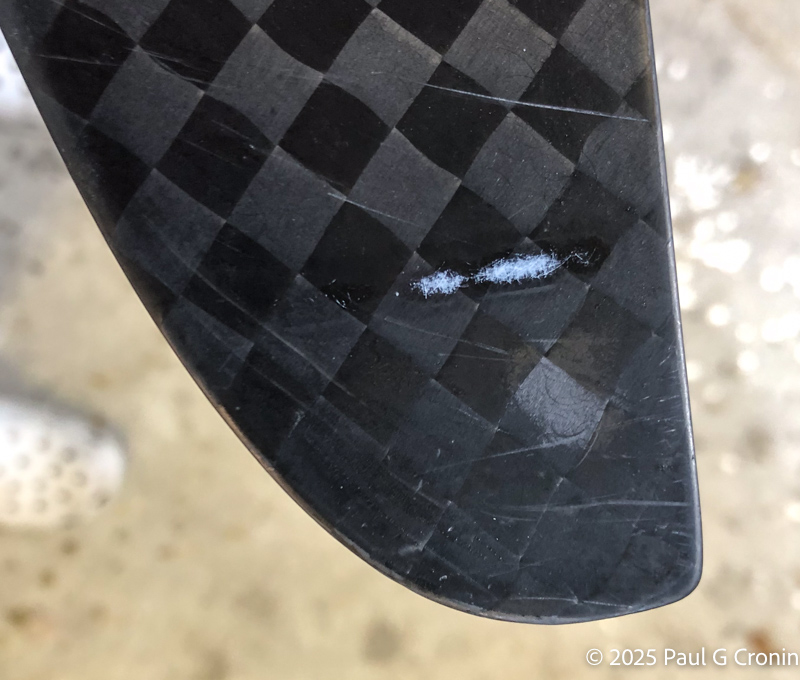
One caution is don’t sand too much, you can break through the clear coat that is on a lot of foils and that will mean spraying clear coat on which is not hard, but has a lot of tricks to get it right. This is more a problem when filling scratches, chips, or cracks from impact. This will be my next post since I broke through on the front foil at the tip see photo below.
Two words I will use in this post; Hydrophobic (water repelling) & Hydrophilic (water loving).
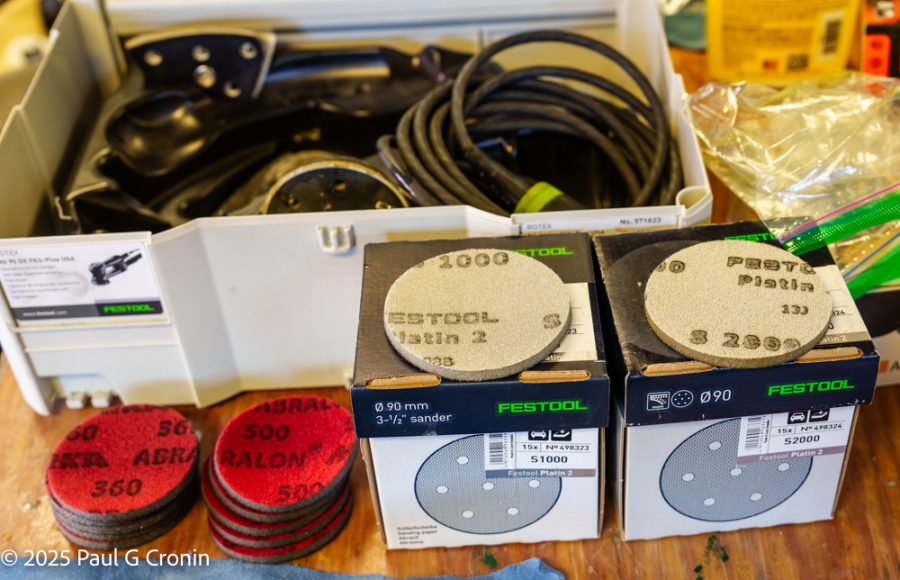
Tools I use:
I use sponge sanding blocks if I wet sand by hand up to 220.
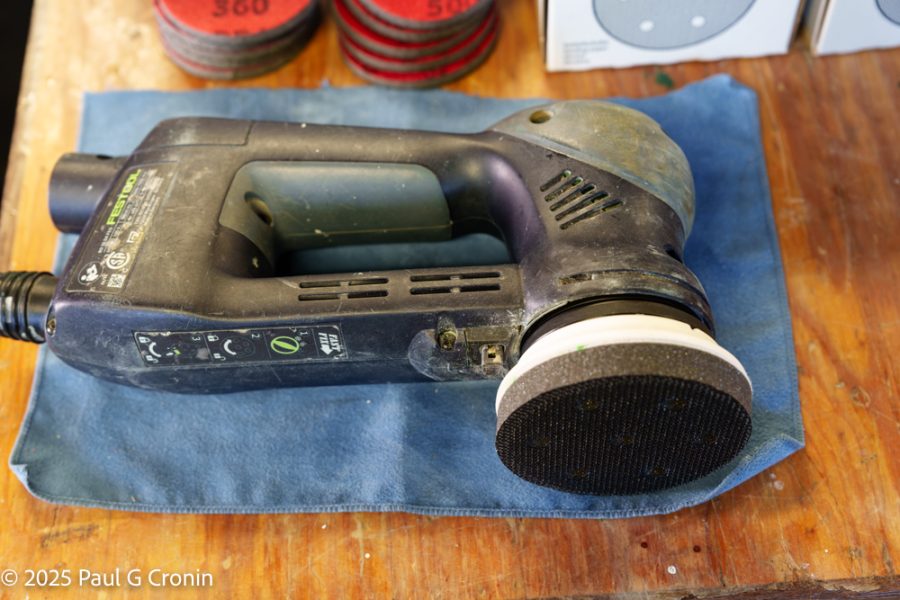
Once over 220 grit I am happy to use my Fesstool Rotex RO 90 DX sander with stock soft pad. I have a lot of years with this tools so I am very comfortable using it for this job. If you are not comfortable using a power tool by all means hand sand.
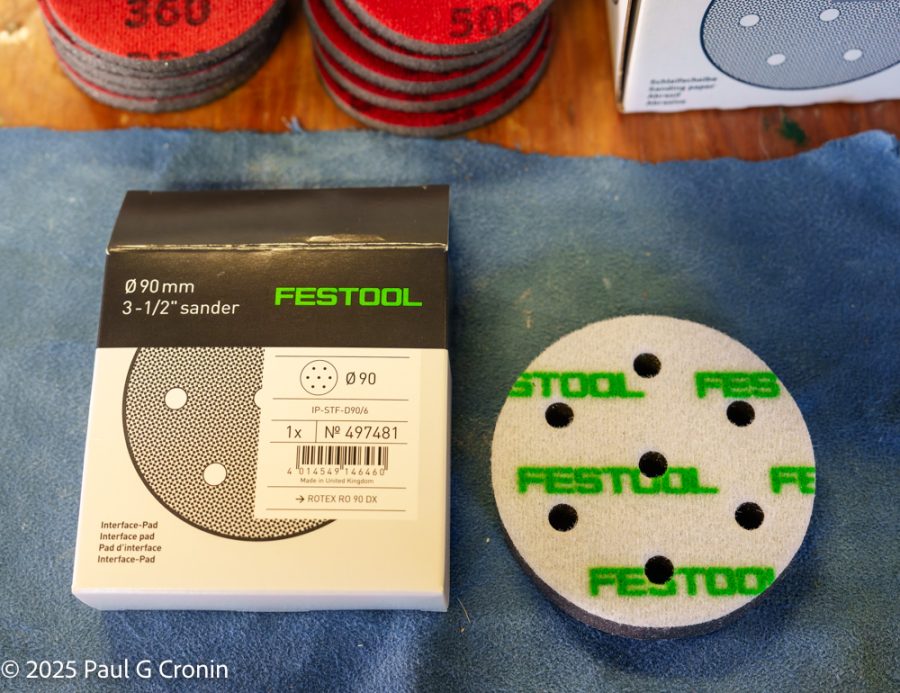
I tried the additional Fesstool No 497481 1/4” thick foam pad thinking this would be nice to help reduce the any hard edges. DO NOT buy this for wet sanding. The 1000 Platin 2 foam pad did not remove from the 497481 it just tore it apart. So save your money and just use the stock soft pad.
On the stock foam pad I put Fesstool Platin 2 wet sanding foam pads. If needed I start with these for a deeper repair I use 360, 500. But for this job I use 1000 and 2000. They work great and obviously you do not use the vacuum attachment. The sander is multi speed, and has a finish setting. If you do not have a good power tool for the job you should do this all by hand.
This method below has proven to help control the ride, and that helps push harder to go faster.
The reason we want our foils to be hydrophilic is water staying on the foils has less chance for ventilation on the foils, and it might stay laminar longer on the foil.
A note here on noise: At times lately when we leave the beach with freshly sanded foils, the water was very warm on the ebb coming out of a creek for the first short distance. The foil had a mid range whistle as soon as foiling. We foiled 200 meters and then jibe. The rest of that session it was quite. Talking with hydro and ocean experts this could be water temp, salinity, pollution, how dirty or stirred up the water is, eddies in the water, there are a lot of variables.
So we should not go nuts if our foils have noise. Some of my fastest runs the foil has been singing. But a well sanded foil setup that is hydrophilic feels to me to have better locked in control, and is not always a quite foil. So I don’t think we should worry too much about foil noise if we have a fair foil and trailing edge, that is hydrophilic. Let it sing and I think you will be surprised it does not make noise all the time.
Here are the steps I take.
First you need your leading and trailing edge, and the whole foil to be very fair and smooth, with no scratches, at least 600 grit smooth. This is very important before going through these steps.
Donaldson trailing edge is not a must but if you have noise it is a great place to start. With wing/wind foiling don’t forget the stabilizer/tail. A lot of times the stabilizer is causing the noise. If you have a different stabilizer switch it out and see if the noise is the same. We also notice when shimming the stabilizer it changes the noise. This makes sense since it is changing the stabilizers angle of attack, (AOA).
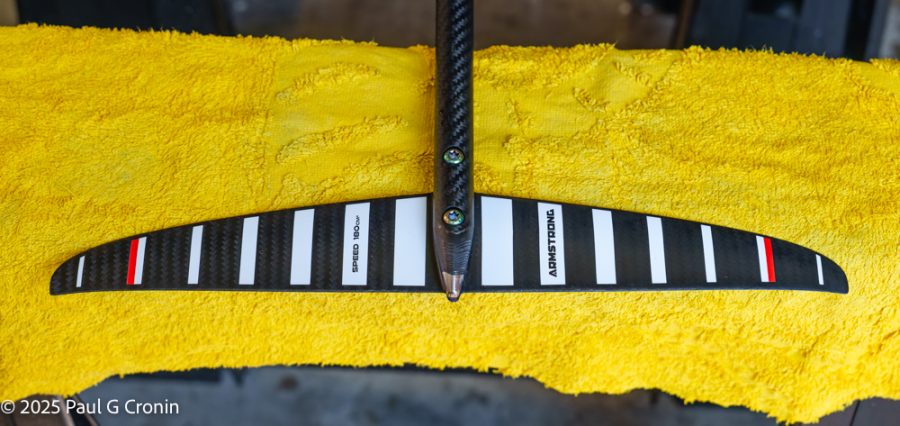
Ok, you have your front foil, rear foil, and mast all very fair and smooth, with no scratches. This is when you do the hydrophobic/hydrophilic test.
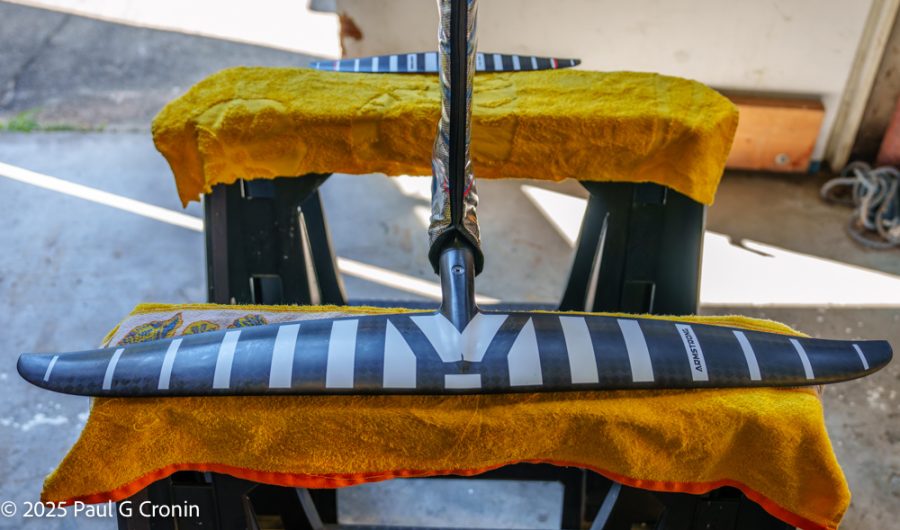
Have each foil horizontal and level. Spray or pour water on the surface and cover the surface fully. If the water stays on the foil it is hydrophilic, if it comes off it is hydrophobic. Be careful at the leading and trailing edges. The last few millimeters might show the water coming off, but that could be it is just running into the hollow section at the trailing edge or running off faster at leading edge. So move it around and be sure. You do not want to over sand your fair leading and trailing edges.
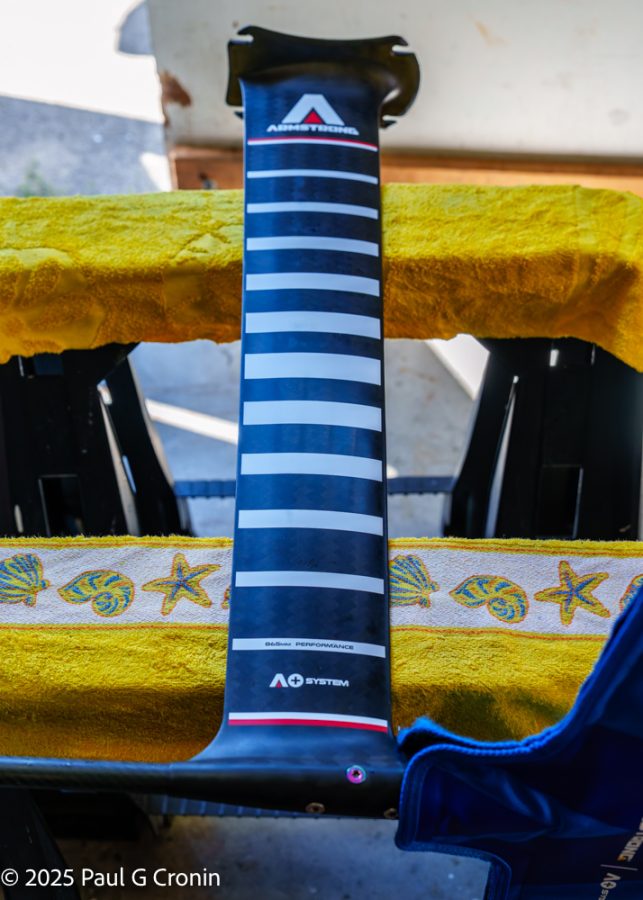
Before you go any further go sail the foil and get a good feel for how it is reacting to waves, maneuvers, breaching, white water, nose down pushing for speed, take it through a fun session pushing all the angles.
At this point if it is already hydrophilic you are all set. If it is hydrophilic but some is hydrophobic and water beads up running off you can change this by sanding the foils. If the surface is a smooth very fair finish you can now sand 1000 grit wet sanding.
Be meticulous when you sand the foil, and don’t over sand. Have a nice stable working surface so the foil does not move around. Keep checking the surface by spraying water. Your goal is not to have any part of the foil where water beads up. Don’t miss any radius at the fuselage or any connections, you want to get all surfaces.
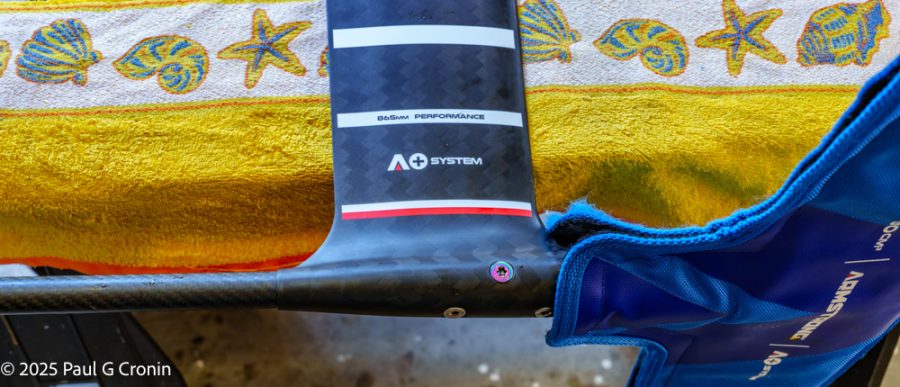
Once at 1000 grit do the same type of session as before, so you feel the difference. It should feel more locked in and smoother if the whole surface was hydrophobic. Also if you had noise it should be less. Some of that final noise could have been air on the foils. Enjoy the new ride and push it hard to feel the difference.
I try not to smug with sweaty hands or sunscreen on the foil once at this point. I know this is picky but it helps. When packing away rinse with fresh water, and put the covers on once dry and take them off just before foiling. Sweat from your hands, and sunscreen will not let the water stick to the foil. Also try not to put your foils on its side while on the board rigging. This will scratch the tip. And if the tip has scratches it will let air run up the foil when you breach the tip.
For the final step at this point if you want, you can now take the foil to 2000 wet sanded finish. Do the same meticulous sanding with 2000 and keep checking the surface. I have found that it still feels locked in. But is 2000 better than 1000 wet sand finish? The jury is still out. I am doing more testing to find out to see, or if I can feel the difference.
Also in the summer we have a lot of weed and the weed does not stay on the foil as long with the sanded finish. But you will have to touch the leading edges of foils and mast with 1000 or 2000 if you run through a lot of weed. This is just a smooth wipe and it will clean it right up.
I hope this helps you have more control with your foils and improves your session on the water.
Have Fun Every Day! See you soon, Paul
